
Quizz Summary
0 of 18 Questions completed
Questions:
Information
You have already completed the quizz before. Hence you can not start it again.
Quizz is loading…
You must sign in or sign up to start the quizz.
You must first complete the following:
Results
Results
Your time:
Time has elapsed
You have reached 0 of 0 point(s), (0)
Earned Point(s): 0 of 0, (0)
0 Essay(s) Pending (Possible Point(s): 0)
Categories
- Not categorized 0%
- Review
- Answered
- Correct
- Incorrect
-
Question 1 of 18
1. Question
CorrectIncorrectHint
 Shortness of breath.
Wheezing when exhaling, remember not all asthma sufferers wheeze.
Dry or moist persistent cough, particularly at night, early morning and with exercise.
Tightness of the chest.
Inability to speak more than one or two words per breath. -
Question 2 of 18
2. Question
CorrectIncorrectHint
- Severe cough.
- Moderate wheezing, and it occurs at rest.
- Difficulty breathing, only able to speak short sentences.
- Chest tightness.
- Inability to sleep.
-
Question 3 of 18
3. Question
CorrectIncorrectHint
- Gasping for breath.
- Severe wheezing.
- Severe difficulty breathing, only able to speak one or two words per breath.
- Severe chest pain/tightness when taking a breath or coughing.
- Pale, sweaty skin.
- Increasing pulse rate.
-
Question 4 of 18
4. Question
CorrectIncorrect -
Question 5 of 18
5. Question
CorrectIncorrectHint
Anaphylaxis is a life-threatening allergic reaction that involves the entire body. Anaphylaxis may result in shock or death, and therefore requires immediate medical attention. This most severe type of allergic reaction often involves many organs of the body such as:
 The skin – welts and hives (urticaria).The upper airways – swelling of the throat and vocal cords leading to obstruction in breathing.
 -
Question 6 of 18
6. Question
CorrectIncorrectHint
ASCIA Action Plans do not expire, and therefore the plan is still valid beyond the review date, which is a guide for patients to see their doctor. Ideally, ASCIA Action Plans should be reviewed when patients are reassessed by their doctor or nurse practitioner, and each time they obtain a new adrenaline autoinjector prescription, which is approximately every 12 to 18 months.
-
Question 7 of 18
7. Question
CorrectIncorrectHint
 Pollens: from trees, grasses, weeds etc.Dust: Dust mites, and wood/grainMouldsPet/animal dander (skin flakes in an animal’s fur or hair); pet urine, saliva, faecesCertain drugs/medications; asprin and some blood pressure control medicationCigarette smoke; is directly harmful the airways and makes asthma worse, so exposure to cigarette smoke should be avoided by anyone who has asthma.
 -
Question 8 of 18
8. Question
CorrectIncorrectHint
Foods (especially nuts, seafood, eggs, cow’s milk, soy, wheat).Drugs (antibiotics, x-ray contrast dyes).Venom of stinging insects (bees, wasps, ants).Herbal remedies (Royal Jelly).Latex. -
Question 9 of 18
9. Question
CorrectIncorrectHint
Anaphylactic Shock
Anaphylaxis is a life-threatening allergic reaction that involves the entire body. Anaphylaxis may result in shock or death, and therefore requires immediate medical attention. This most severe type of allergic reaction often involves many organs of the body such as:
The skin – welts and hives (urticaria).The upper airways – swelling of the throat and vocal cords leading to obstruction in breathing.The nose – sneezing, blocking, watering, runny nose.The lung – wheezing and asthma.The circulatory system – a fall in blood pressure and collapse.Some triggers include:
Foods (especially nuts, seafood, eggs, cow’s milk, soy, wheat).Drugs (antibiotics, x-ray contrast dyes).Venom of stinging insects (bees, wasps, ants).Herbal remedies (Royal Jelly).Latex.
In some cases, anaphylaxis is preceded by signs of a mild to moderate allergic reaction.
For insect allergies, these can be signs of anaphylaxis.
Symptoms of severe allergic reaction or anaphylaxis may include:
Abdominal cramping or pain Diarrhea Nausea and/or vomitingPain or tightness in the chestDifficulty talking and/or hoarse voiceDifficulty swallowingDifficulty and/or noisy breathingWheeze or persistent coughFear or anxietyHeart palpitationsFlushing of the faceSwelling of the face, eyes, or tongueDizziness or vertigoWeaknessLoss of unconsciousnessPale and floppy (young children)
 Follow the DRSABCD emergency action plan. For insect allergy, flick out the sting if it can be seen (but do not remove ticks). Stay with the casualty and reassure. Give medications if prescribed (whilst antihistamines may be used to treat mild to moderate allergic reactions, if the reaction progresses to anaphylaxis then adrenaline is the only suitable medication). Locate adrenaline auto-injector if available (instructions are included in the Action Plan for Anaphylaxis which should be stored with the adrenaline auto-injector: EpiPen/AnaPen). Contact parent/guardian or other emergency contact.
Give the adrenaline auto-injector if available (instructions are included in the ASCIA Action Plan for Anaphylaxis, stored with the adrenaline auto-injector)
Follow the DRSABCD emergency action plan. Lay person flat and elevate legs – if breathing is difficult, allow them to sit but do not stand.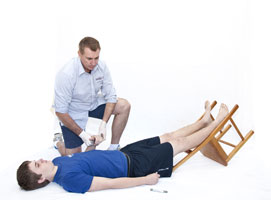
 Further adrenaline doses may be given (when an additional adrenaline auto-injector is available), if there is no response after five minutes. If in doubt, give the adrenaline auto-injector. Adrenaline is life saving and must be used promptly. Withholding or delaying the giving of adrenaline can result in deterioration and death. This is why giving the adrenaline auto-injector is the first instruction on the ASCIA Action Plan for Anaphylaxis. If cardiopulmonary resuscitation (CPR) is given before this step there is a risk that adrenaline is delayed or not given.
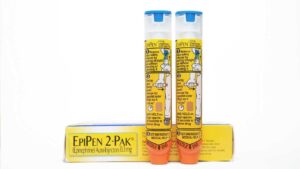 In the ambulance, oxygen will usually be administered to the casualty by ambulance personnel. Medical observation of the casualty in hospital for at least four hours is recommended after the use of adrenaline and treatment of anaphylaxis. Adrenaline auto-injectors available in Australia and New Zealand are EpiPen and AnaPen. The Junior versions of EpiPen and AnaPen are generally prescribed for children aged one to five years.

If the allergic reaction is due to either a bee, wasp or ant sting and there is no EpiPen/AnaPen available use the Pressure Immobilisation (Bandaging) Technique for snakebite treatment.
For further information on anaphylaxis visit:
Australasian Society of Allergy and Clinical Immunology (ASCIA)
-
Question 10 of 18
10. Question
CorrectIncorrect -
Question 11 of 18
11. Question
CorrectIncorrect -
Question 12 of 18
12. Question
CorrectIncorrect -
Question 13 of 18
13. Question
CorrectIncorrect -
Question 14 of 18
14. Question
CorrectIncorrect -
Question 15 of 18
15. Question
CorrectIncorrect -
Question 16 of 18
16. Question
CorrectIncorrectHint
Pain or tightness in the chest
Difficulty talking and/or hoarse voice
Difficulty swallowing
Difficulty and/or noisy breathing
Wheeze or persistent cough
Swelling of the face, eyes, or tongue
Loss of unconsciousness
Pale and floppy (young children) -
Question 17 of 18
17. Question
CorrectIncorrectHint
Asthma is a medical condition that causes narrowing of the small airways in the lungs. Typically, asthma sufferers develop wheezing and have increased mucus production in their lungs. Asthma sufferers often have the disease for many years. The episodes of shortness of breath may be life threatening and often triggered by allergic reactions.
-
Question 18 of 18
18. Question
CorrectIncorrectHint
- Follow the DRSABCD emergency action plan
- Sit in a comfortable upright position.
- Be calm and reassure the casualty.
- Call 000 for an ambulance.
- Continuously repeat reliever medication every four minutes until the ambulance arrives.